
4th T20 2025 – India Dominate Australia with Stunning Spin Show and Team Brilliance
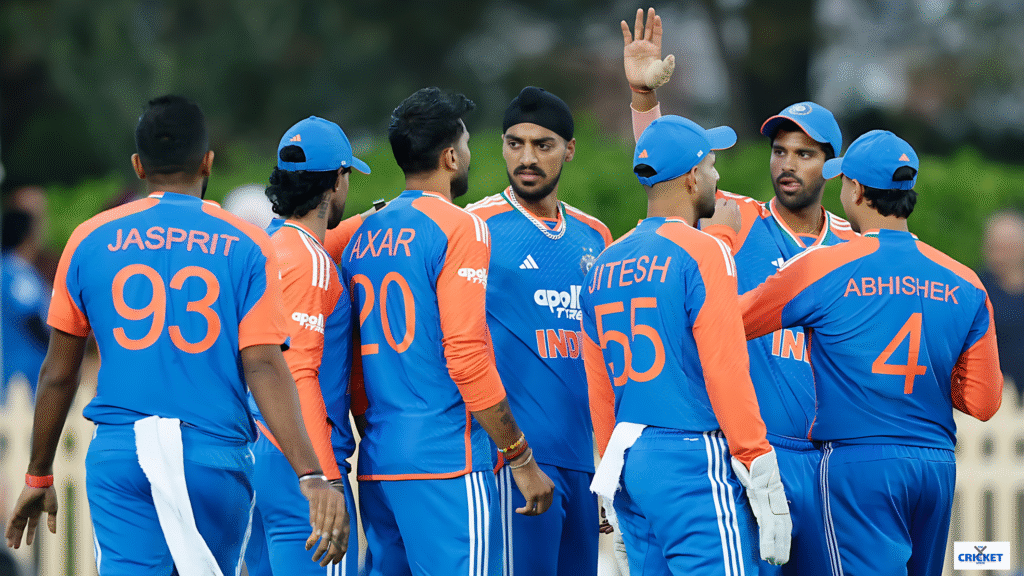
India vs Australia 4th T20I 2025 – India Spin It Right at Carrara to Take 2-1 Series Lead
The India–Australia T20 rivalry has always delivered thrillers, from explosive batting duels to dramatic collapses. The 4th T20I of the 2025 series at Carrara Oval, Gold Coast, was no exception — a night where India’s spinners dictated the script and Australia’s batting lineup unraveled spectacularly.
Under clear Queensland skies, both teams entered the game with the series delicately poised at 1–1. For India, this was a chance to seize the advantage and prove their depth in spin and youth talent. For Australia, it was a must-win contest to stay alive. By the end of the night, it was India celebrating — a 48-run victory built on control, craft, and composure.
1. The Toss and Team News
The 4th T20 between India and Australia kicked off with a strategic twist. Australia’s captain Mitchell Marsh won the toss and decided to field first — a move influenced by the ground’s dew factor and the team’s recent success in chasing during the T20 series. India, on the other hand, showed faith in their combination from the previous match, making no major changes.
The Indian team’s bowling attack featured two front-line spinners — Axar Patel and Washington Sundar — alongside mystery spinner Varun Chakravarthy, all of whom were expected to play a key role in the 4th T20 due to the dry surface. The batting order remained flexible, with Shubman Gill and Abhishek Sharma opening, followed by Suryakumar Yadav, Rinku Singh, and all-rounder Shivam Dube.
The strategy was clear: bat deep, build partnerships, and apply scoreboard pressure before spin would dominate in the second innings.
2. India’s Batting: Steady Start, Middle-Order Stumble
India began their innings with calculated aggression in the 4th T20, aware that early wickets could derail momentum. The pitch offered a touch of grip for seamers, making stroke play tricky early on. Shubman Gill, who had struggled for rhythm earlier in the series, rose to the occasion, crafting a composed 46 off 35 balls. His flicks, cover drives, and precise placement showcased his regained confidence.
Abhishek Sharma gave him solid support, scoring 28 off 19 balls before falling lbw to Jason Behrendorff. After his dismissal, Australia tightened the screws through Nathan Ellis and Marcus Stoinis, who varied pace and length cleverly.
Suryakumar Yadav, India’s captain, tried to break free but misjudged a slower ball and was caught for 14. The middle order stumbled between overs 10 and 14, as Rinku Singh and Washington Sundar departed in quick succession.
At 102 for 5, India seemed to be losing their grip on the 4th T20. However, Shivam Dube’s counterattacking cameo — 22 off 16 balls — reignited hope. His six off Josh Hazlewood and Axar Patel’s late flourish pushed India to a fighting total of 167 for 8 in 20 overs. Given the conditions and the nature of the pitch, it was a score that kept the 4th T20 alive as a tightly balanced contest.
3. Australia’s Chase: Bright Start Turns to Sudden Collapse

Australia began their chase confidently in the 4th T20, showing early intent to dominate. Openers Mitchell Marsh and Matthew Short looked in fine touch, capitalizing on the powerplay overs. Their aggressive approach took Australia to 39 in the first four overs, with Marsh’s crisp drives and Short’s fearless pulls putting the Indian bowlers under pressure.
However, as the 4th T20 progressed, India’s spin trio tightened the screws. Varun Chakravarthy provided the much-needed breakthrough, deceiving Short with a flighted delivery that gripped and turned sharply to crash into the stumps. That dismissal opened the floodgates and shifted the momentum decisively in India’s favor.
Mitchell Marsh tried to rebuild the innings, scoring 30 off 24 balls, but Axar Patel ended his stay with a clever delivery that forced a mistimed sweep to deep square leg. Once Marsh departed, Australia’s chase began to unravel rapidly in the 4th T20.
The real game-changer, however, was Washington Sundar. Introduced in the 10th over, Sundar bowled with remarkable control — his subtle drift and sharp turn dismantled the middle order. He picked up Josh Inglis and Marcus Stoinis in quick succession, finishing with stunning figures of 3 wickets for just 3 runs in 1.2 overs.
Axar Patel maintained the pressure at the other end, delivering a masterclass in discipline and flight. His spell of 2 for 20 in four overs accounted for Tim David and Ben McDermott, two of Australia’s most dangerous hitters in the 4th T20.
From a strong 91 for 3, Australia suddenly crumbled to 119 all out in 18.2 overs, losing seven wickets for just 28 runs. The collapse was complete, leaving the crowd stunned and India jubilant.
It was a clinical display of spin bowling — patience, precision, and teamwork — that sealed the 4th T20 in India’s favor.
4. Bowling Brilliance: India’s Spin Show
The 4th T20 will be remembered as a true exhibition of India’s spin dominance, where Sundar, Axar, and Varun delivered a collective masterclass in control and precision. Their performance defined the rhythm of the game and ultimately sealed India’s emphatic victory.
Washington Sundar (3/3): His spell was short but magical. Using angles and subtle dip, he consistently forced Australian batters into mistimed shots. It was classic Sundar — calm, economical, and effective under pressure. His performance in the 4th T20 once again proved why he’s one of India’s most dependable all-round spinners in limited-overs cricket.
Axar Patel (2/20): Axar’s left-arm spin brought variation and discipline. He used the large boundaries cleverly, enticing the batters into risky aerial strokes. His dismissal of Tim David — caught at long-on — was a pivotal moment that broke Australia’s resistance.
Varun Chakravarthy (1/23): Though not among the top wicket-takers, his first breakthrough was vital. His unorthodox release and mystery spin kept the batters guessing, setting the tone for India’s middle-over dominance.
The pacers complemented the spinners brilliantly — Arshdeep Singh and Mukesh Kumar bowled disciplined spells during the powerplay, ensuring there was no easy scoring early on. Together, India’s bowling unit executed the perfect strategy: contain in the first six, choke in the middle, and crush at the death.
5. Key Turning Points
Varun’s Early Breakthrough: The dismissal of Matthew Short broke Australia’s rhythm and set the stage for India’s spinners.
Sundar’s Double Strike: Two wickets in one over — Stoinis and Inglis — completely derailed Australia’s chase.
Axar’s Control in the Middle Overs: By drying up boundaries, Axar built pressure that led to rash shots.
Australia’s Middle-Order Meltdown: From 90/3 to 119 all out — the collapse showcased India’s superior bowling plan.
6. Captaincy and Strategy
Suryakumar Yadav deserves credit for his captaincy. His rotation of bowlers was smart and flexible — he held Sundar back until the 10th over, waiting for the right matchups. He fielded aggressively, often with a slip for spinners even after the powerplay, reflecting confidence in his bowlers.
For Australia, Mitchell Marsh’s tactics looked sound early on, but his batting collapse left him frustrated. The decision to promote Tim David didn’t work, and the lower order offered little resistance.
Fielding also played a role — India’s energy in the field stood out. Rinku Singh’s sharp catch at deep midwicket and Gill’s direct throw to run out Nathan Ellis showcased commitment.
7. Post-Match Reactions
After the match, Suryakumar Yadav praised his spinners:
“The way our bowlers adapted to conditions was exceptional. The pitch offered some grip, and they used it perfectly. Credit to Sundar and Axar — their spells changed the game.”
Washington Sundar, named Player of the Match, remained humble:
“It was one of those days when everything clicked. The plan was to keep things simple, hit the right lengths, and let the pitch do the rest.”
Mitchell Marsh admitted his side was “outplayed by spin.”
“We started well but lost our way once the spinners came on. Credit to India, they were clinical. We’ll regroup for the final game.”
8. Statistical Highlights
India’s 48-run win is their largest T20 victory margin against Australia in Australia since 2020.
Washington Sundar’s 3/3 is the most economical spell by an Indian bowler in T20Is (min 3 wickets) since 2022.
Australia’s 7-wicket collapse for 28 runs is their second-worst in T20 history.
Shubman Gill’s 46 is his highest T20I score against Australia.
India now lead the five-match series 2–1 with one game left.
9. Tactical Analysis
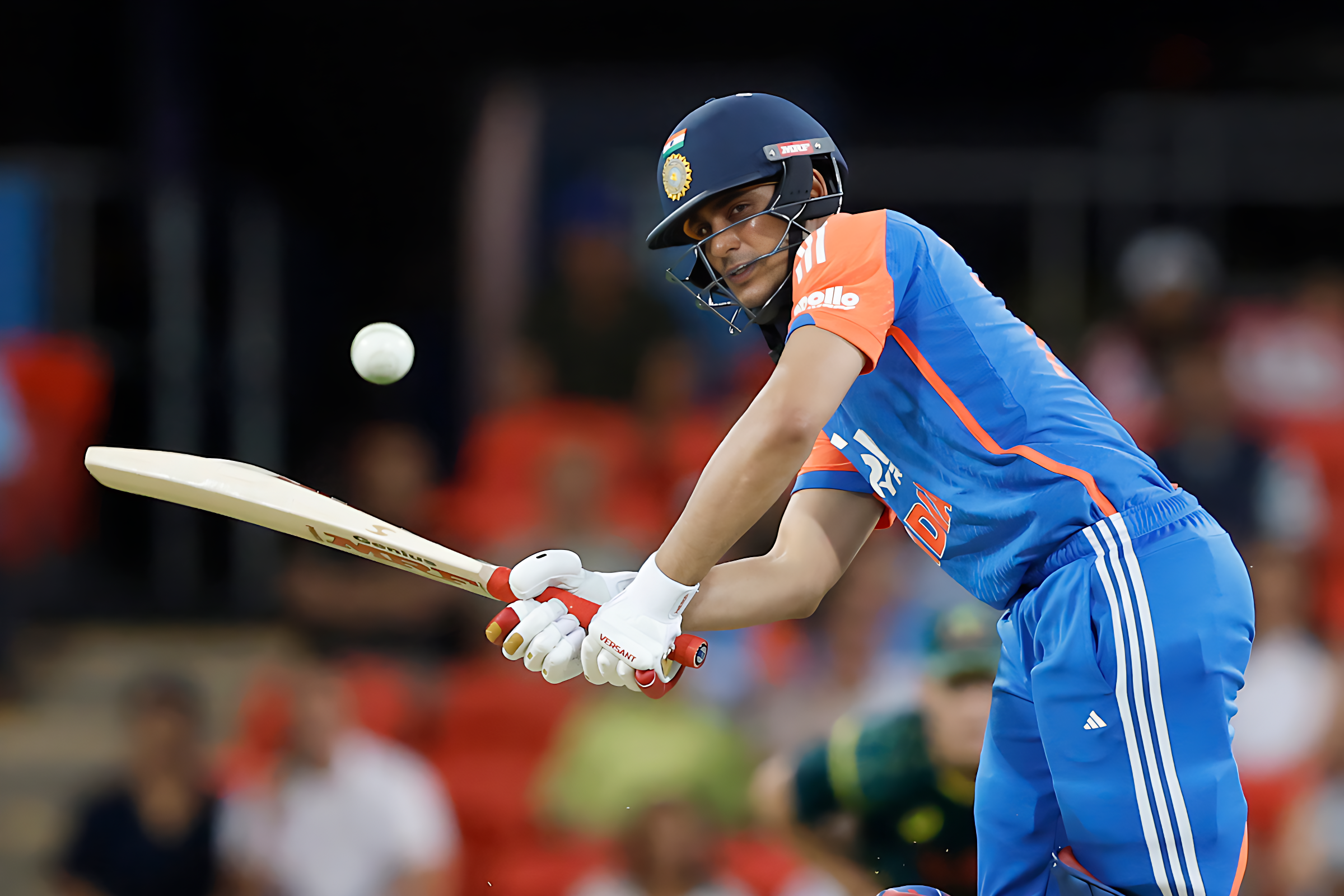
The match was not about pace or power — it was about patience and planning. India read the pitch better. The Carrara surface had a dry top layer and slight cracks that offered turn from the 7th over onward.
While Australia’s pacers stuck to hard lengths, India’s spinners slowed the ball down, using flight and variation to exploit uneven bounce.
The field placements were also noteworthy — SKY placed two catching men in the deep midwicket and long-off regions specifically for miscued big hits. This trapped Marsh and Tim David perfectly.
India’s batting template was balanced — cautious start, acceleration in the middle, and controlled finish. Despite no player crossing fifty, their partnerships ensured momentum never completely stalled.
10. What This Win Means for India
This victory is more than just a series lead. It reflects the team’s depth and adaptability. India’s spin trio performing in Australian conditions is a huge boost ahead of the ICC T20 World Cup next year, which will be hosted in similar surfaces across the southern hemisphere.
For young players like Abhishek Sharma and Rinku Singh, this exposure is invaluable. Shubman Gill’s return to form is another plus. The leadership of Suryakumar Yadav continues to impress — calm under pressure, aggressive with intent, and trusting of his bowlers.
11. Australia’s Takeaways and Areas of Concern
Australia’s power-hitters failed to adapt. Their reliance on pace-friendly conditions backfired. The team lacked a specialist spinner capable of exploiting the track. Mitchell Marsh’s overdependence on pace and the absence of Adam Zampa proved costly.
Their middle order, especially between overs 8 to 14, continues to be a weakness. Without Glenn Maxwell and Steve Smith, the lineup looks unstable. Rebuilding that middle segment will be crucial for the final match and future tournaments.
Conclusion – India’s Golden Night at Carrara
The 4th T20I at Carrara Oval will be remembered as a masterclass in spin bowling and strategic execution. India didn’t post a massive score, yet their discipline, teamwork, and bowling brilliance made all the difference.
In a format often dominated by power hitting, India reminded the cricketing world that spin — when used intelligently — can still be the ultimate weapon. The young team, led by Suryakumar Yadav, showed composure, adaptability, and confidence beyond their years.
With one match left in the series, India not only hold the lead but also the psychological edge. As both teams head to Sydney, the equation is clear: India seek closure, Australia seek redemption.
Either way, cricket fans are in for one last spectacular showdown.
Written by The Cricket Show
For more trending cricket news, stats, and expert opinions, visit our homepage: The Cricket Show – Latest Cricket Updates.