Ashes 2025 Team News: Latest on Josh Hazlewood’s Hamstring and Selection
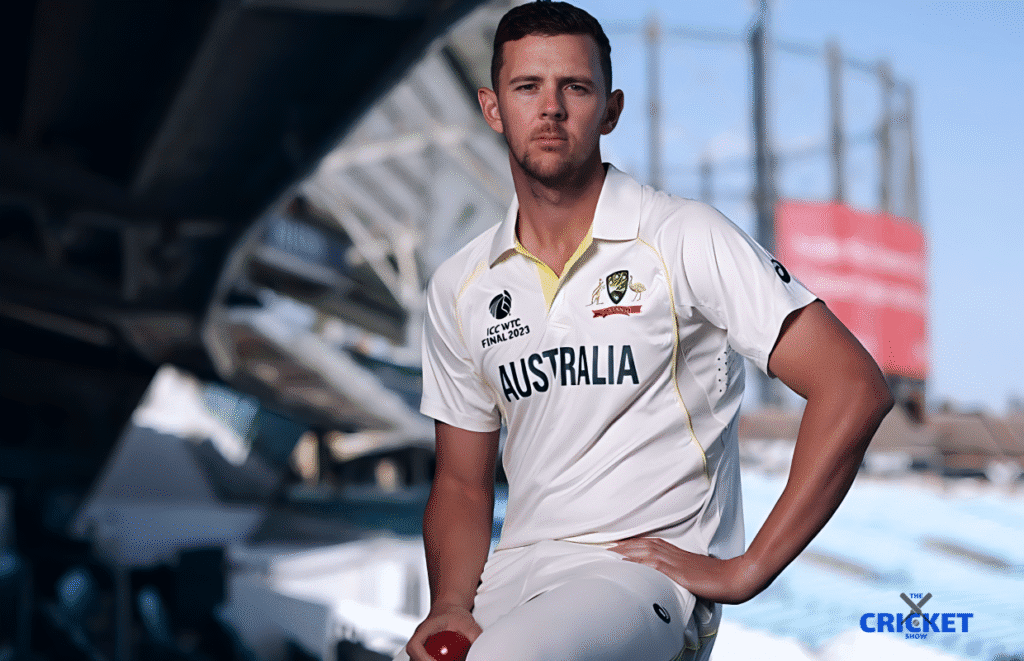
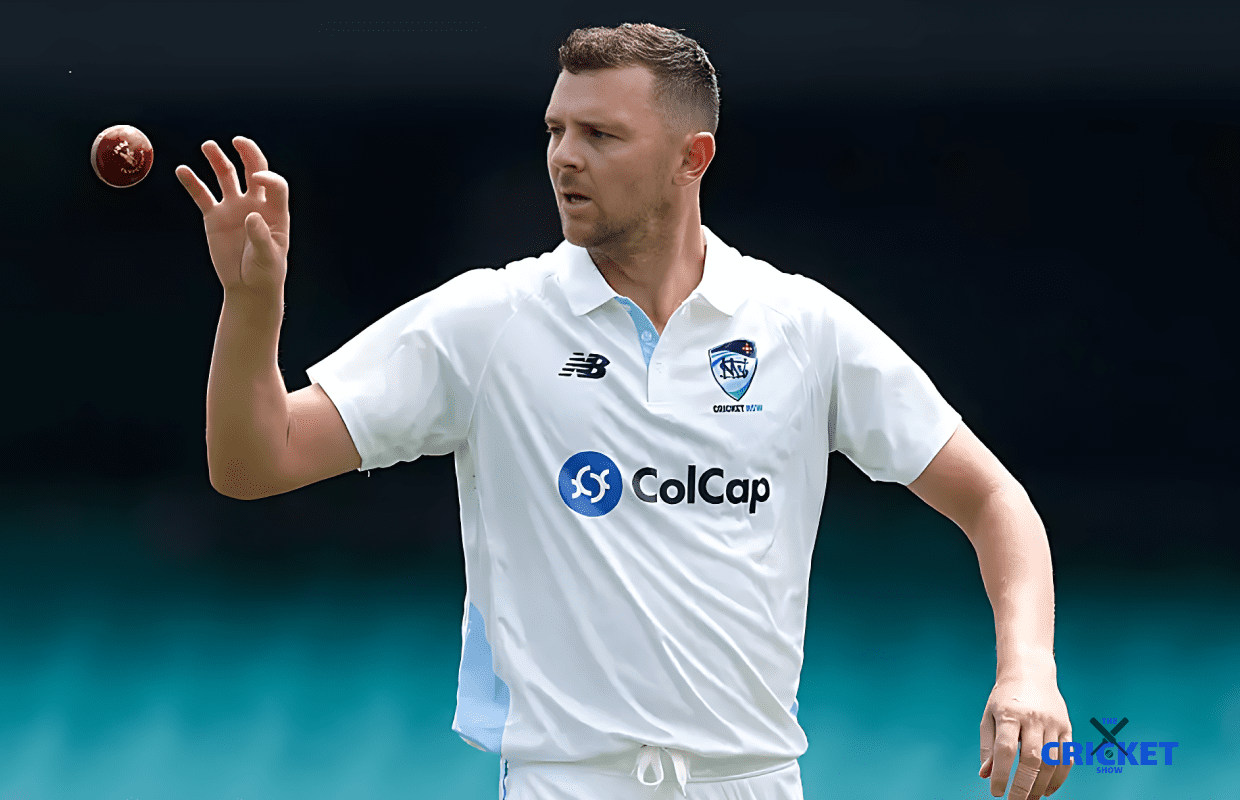
Australian cricket player posing with a ball during a match or training session.
The Australian cricket team has received a worrying blow ahead of the much-anticipated Ashes 2026 series, with veteran pacer Josh Hazlewood reportedly battling a hamstring injury.
Hazlewood, one of the pillars of Australia’s bowling lineup, sustained the injury during a recent Test match against South Africa, forcing him off the field mid-spell. This setback has sparked growing concerns among fans and experts alike — can he recover in time for the Ashes, cricket’s most historic and emotionally charged series?
With the Ashes scheduled just a few months away, Australia faces the critical challenge of managing Hazlewood’s fitness while ensuring the pace unit remains formidable. In this in-depth analysis, we explore the details of Hazlewood’s injury, his recovery prospects, medical insights, Australia’s backup options, and the potential impact on their Ashes campaign.
1. The Incident: How Hazlewood Got Injured
During Australia’s recent Test series in Perth against South Africa, Hazlewood pulled up mid-run after bowling his third over on Day 3. He immediately signaled discomfort in his right hamstring and was seen limping back to his bowling mark.
Team physios attended to him, and he was subsequently taken off the field for scans, which later confirmed a low-grade hamstring strain.
While it wasn’t a full tear, the injury was serious enough to sideline him for the remainder of the match and cast doubt over his availability for the upcoming fixtures.
This is not Hazlewood’s first encounter with soft-tissue issues — the pacer has had a history of recurring side strains and hamstring niggles in recent years, which have periodically disrupted his rhythm and match availability.
2. The Nature of the Injury
A hamstring strain involves damage to the muscles or tendons at the back of the thigh, often caused by sudden acceleration or overexertion.
For fast bowlers like Hazlewood, hamstrings are among the most vulnerable muscle groups due to the repetitive explosive movements involved in the bowling action — long run-ups, jump, landing impact, and follow-through.
Medical Report Summary:
Type: Grade 1 strain (mild)
Affected Area: Right hamstring
Expected Downtime: 3–5 weeks depending on recovery rate
Treatment: Physiotherapy, strength conditioning, rest, and gradual return-to-bowling program
Cricket Australia’s medical team has not released an official timeline, but initial reports suggest they are optimistic he could return in time for the pre-Ashes warm-up matches in March 2026.
3. Hazlewood’s Injury History: A Pattern of Concern
Over the past three years, Hazlewood’s career has been periodically interrupted by injuries, raising questions about workload management and long-term sustainability.
A Look at His Recent Injuries:
| Year | Injury | Tournament/Series Missed |
|---|---|---|
| 2021 | Side strain | Missed part of Ashes 2021–22 |
| 2022 | Achilles issue | Ruled out of Pakistan tour |
| 2023 | Minor back stiffness | Missed ODI series vs India |
| 2024 | Hamstring tightness | Rested during West Indies Tests |
| 2025 | Current hamstring strain | Doubtful for Ashes 2026 preparation |
While the Australian management has been cautious with his workload, his injury record highlights a troubling pattern. Hazlewood’s bowling style — smooth yet high-effort — demands exceptional physical conditioning. However, recurring strains indicate that the toll of international cricket might be catching up with him.
4. Importance of Hazlewood in the Ashes Context
The Ashes series isn’t just another cricket contest — it’s the most prestigious rivalry in Test cricket history.
For Australia, Hazlewood’s role has been monumental in past Ashes battles. His ability to generate movement off the seam, maintain consistent lines, and extract bounce on both Australian and English pitches makes him indispensable.
His Ashes Record:
Matches: 20
Wickets: 74
Average: 24.6
Best Figures: 6/48
In the 2021–22 Ashes at home, Hazlewood formed part of Australia’s golden pace trio alongside Pat Cummins and Mitchell Starc, dismantling England’s fragile batting lineup. His control and discipline provide the perfect balance between Cummins’ aggression and Starc’s swing.
Losing him, even temporarily, could upset the team’s bowling equilibrium — something Australia can ill afford heading into a high-pressure series.
5. The Recovery Plan: Can He Make It in Time?
According to medical experts close to Cricket Australia, Hazlewood’s recovery will follow a phased rehabilitation program, focusing on three key stages:
Stage 1 – Rest and Physiotherapy (Weeks 1–2)
Ice therapy and controlled stretching to reduce inflammation.
No bowling activity; limited gym work.
Stage 2 – Strength and Conditioning (Weeks 3–4)
Gradual reintroduction to light running and bowling drills.
Focus on hamstring strengthening, flexibility, and endurance.
Stage 3 – Bowling Simulation and Match Preparation (Weeks 5–6)
Full-speed bowling in the nets.
Participation in intra-squad games or warm-up matches before official selection.
If recovery proceeds without setbacks, Hazlewood could potentially feature in Australia’s pre-Ashes practice matches or the Sheffield Shield as part of his comeback.
However, any recurrence of strain during training could delay his return by several additional weeks — a risk both player and management must carefully assess.
6. Australia’s Backup Options if Hazlewood Misses Out
While Hazlewood’s experience and control are irreplaceable, Australia boasts impressive fast-bowling depth. If he fails to recover in time, selectors have multiple options to fill the void.
A. Scott Boland
The Melbourne workhorse has already proven his mettle in the Ashes 2021–22, famously taking 6/7 in Melbourne. Boland’s seam control and consistency mirror Hazlewood’s attributes, making him the natural first replacement.
B. Michael Neser
An underrated domestic performer, Neser offers swing, control, and handy lower-order batting. He could be a like-for-like option in English conditions.
C. Lance Morris
Nicknamed “The Wild Thing,” Morris brings express pace and aggression. While raw, his ability to bowl 150+ km/h adds firepower to the attack.
D. Jhye Richardson
If fit, Richardson’s versatility and ability to swing the ball both ways make him an outside contender for the Ashes squad.
In any scenario, Australia remains spoiled for choice, though none quite replicate Hazlewood’s precision and experience.
7. Captain Pat Cummins’ Dilemma
Australia’s skipper Pat Cummins faces a tactical conundrum. While he would want his pace spearhead fit, he must also prioritize long-term sustainability.
The team’s medical and selection committee will likely adopt a cautious stance — Hazlewood might not play in all five Tests, even if fit, to avoid aggravating the injury.
Expect a rotation policy involving Boland and Starc, ensuring the attack remains fresh throughout the demanding five-match series.
Cummins’ leadership will be tested not just on the field but in managing workloads, squad morale, and strategic replacements during the high-pressure contest.
8. Psychological Impact: The Mental Battle of Injury Recovery
For professional athletes, injury recovery isn’t merely physical — it’s psychological.
Hazlewood, a seasoned campaigner, knows this well.
Repeated injuries can create fear of re-injury, disrupting confidence and rhythm. For bowlers, even a slight hesitation in stride or follow-through can affect accuracy and pace.
Hazlewood has openly spoken about this challenge in the past, saying:
His mental resilience will play a crucial role in ensuring a smooth return to top form.
9. Historical Parallels: Fast Bowlers and Hamstring Recoveries
Fast bowlers and hamstring injuries share a long, painful history.
Yet, many have returned successfully:
Glenn McGrath (2005 Ashes): Missed the second Test due to ankle injury but came back strong to lead Australia to victory later in the series.
Brett Lee (2008): Recovered from hamstring surgery to reclaim his pace and perform in subsequent tours.
James Anderson (2019 Ashes): Missed most of the series due to calf injury, proving how crucial recovery management is at elite levels.
If Hazlewood’s rehab is handled carefully, there’s no reason he can’t follow a similar comeback trajectory.
10. The Road Ahead: Timelines and Milestones
Estimated Return Timeline (Based on Recovery):
| Phase | Timeframe | Milestone |
|---|---|---|
| Initial Rest | Weeks 1–2 | Light rehab, physiotherapy |
| Controlled Bowling | Weeks 3–4 | Light net sessions |
| Full Training | Weeks 5–6 | Match-simulation practice |
| Match Return | Week 7 onwards | Possible inclusion in warm-up matches |
With the Ashes expected to begin in late March 2026, Hazlewood has roughly three months for complete recovery and match conditioning — an achievable but tight window.
11. What’s at Stake for Australia
The Ashes aren’t just another series — they define legacies. For Australia, defending or reclaiming the urn is a matter of national pride.
Hazlewood’s absence, even for a single Test, could disrupt bowling plans and workload rotations. Moreover, his partnership with Cummins and Starc forms the backbone of Australia’s attack.
If fit, Hazlewood will be key to Australia’s strategy on both bouncy Gabba wickets and swing-friendly English-style pitches in Melbourne and Sydney.
Without him, the team must rely heavily on Cummins and Starc — both of whom have had their own workload challenges in recent seasons.
Conclusion
Josh Hazlewood’s hamstring injury has cast a shadow of uncertainty over Australia’s preparations for the Ashes 2026. However, the signs are cautiously optimistic.
A grade-one strain is the mildest form of hamstring injury, and with disciplined rehabilitation, he could be back in training well before the series opener.
Ultimately, Hazlewood’s presence is more than just about numbers — it’s about the psychological edge, experience, and precision he brings to the crease.
If he can recover in time, Australia’s pace battery will once again be the envy of the cricketing world.
Written By The Cricket Show
Stay updated with the latest The Cricket Show – Latest Cricket Updates. — your trusted source for breaking cricket insights, match previews, and sports stories that matter.
Follow us daily for exclusive updates on Josh Hazlewood’s recovery, Australia’s Ashes preparations, and everything cricket!