Bangladesh Finish Strong — Ireland’s Last Stand Ends Abruptly at 286
Vishal Solanki November 12, 2025
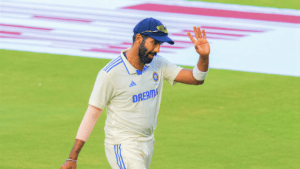
Bangladesh and Ireland players pose ahead of the first Test match on November 11, highlighting the intense cricket rivalry.
Cricket fans witnessed a thrilling contest between Bangladesh and Ireland, where both sides battled hard before Bangladesh sealed the match with a remarkable finish. Ireland’s innings ended abruptly at 286 runs, despite a promising start that had fans hoping for a higher total. Bangladesh’s disciplined bowling attack, combined with sharp fielding and tactical brilliance, ensured that Ireland couldn’t capitalize on their early momentum.
This match wasn’t just about numbers — it was about resilience, strategy, and seizing the crucial moments. From Ireland’s middle-order efforts to Bangladesh’s fiery comeback with the ball, the encounter offered everything cricket enthusiasts love: tension, turnarounds, and moments of pure brilliance.
Let’s dive deep into how Bangladesh turned a challenging situation into a commanding finish and how Ireland’s last stand crumbled just when it mattered most.
1. The Stage Was Set — Ireland’s Confident Start
Ireland won the toss and decided to bat first — a decision that initially seemed to pay off. The pitch was flat, the sun was out, and conditions looked perfect for batting. Openers Paul Stirling and Andy Balbirnie walked out with intent, taking on the Bangladeshi pacers with a mix of aggression and caution.
The first powerplay was dominated by Ireland, with Stirling driving elegantly through the covers and Balbirnie rotating the strike smartly. The duo added a solid 72-run partnership, setting a positive tone for the innings. The Bangladeshi bowlers, despite maintaining good lines, struggled to break through early on.
It looked like Ireland was headed toward a massive score — but in cricket, things can change in a flash.
2. The Breakthrough — Bangladesh Find Their Rhythm
The breakthrough came in the 12th over when Taskin Ahmed induced an edge from Balbirnie, caught neatly at slip by Najmul Hossain Shanto. That wicket opened the floodgates for Bangladesh.
Once the first wicket fell, Bangladesh’s bowlers began to apply pressure from both ends. The introduction of Shakib Al Hasan, the veteran all-rounder, added a layer of control in the middle overs. Shakib’s accuracy and variations forced the Irish batters into mistakes.
Stirling, after a fluent 57 off 49 balls, was dismissed by Shakib with a flighted delivery that spun sharply and clipped the off stump. It was a crucial wicket that shifted the momentum.
From 72/0, Ireland suddenly found themselves at 114/3 — a pattern they’ve seen before when early dominance gave way to a middle-order wobble.
3. Middle Order Fights Back — Tector and Tucker Steady the Ship
Despite the setback, Ireland’s middle order refused to surrender easily. Harry Tector, one of Ireland’s most consistent performers, combined with Lorcan Tucker to rebuild the innings. Both batters displayed maturity, mixing aggression with composure.
Tector played some exquisite strokes through the off side, while Tucker was quick between the wickets, ensuring the scoreboard kept ticking. Their partnership of 84 runs stabilized the innings and brought Ireland back into contention.
At 198/3 after 36 overs, Ireland looked poised for a score beyond 320 — a total that could have tested Bangladesh.
But then, the tides turned once again.
4. The Collapse Begins — Bangladesh Strike in Clusters
When Shoriful Islam returned for his second spell, the dynamics of the game changed dramatically. His raw pace and reverse swing began troubling the set batters. Tector, who was looking fluent on 62, mistimed a pull shot straight into the hands of deep square leg.
That wicket triggered a domino effect. Tucker soon followed, trapped LBW by Mehidy Hasan Miraz, who bowled a deceptive off-break that skidded low.
Within just five overs, Ireland had gone from 198/3 to 223/6 — a collapse that exposed the lower middle order.
Bangladesh sensed blood, and their bowlers tightened the noose. Taskin, Mehidy, and Shakib bowled in perfect tandem, exploiting both movement and turn. The energy in the Bangladeshi camp was electric — every fielder was diving, chasing, and appealing with intensity.
5. The Last Stand — Ireland’s Lower Order Tries to Rally
Despite the slump, Ireland’s lower order showed flashes of resistance. Curtis Campher and Mark Adair tried to rebuild the innings with sensible batting. Campher, in particular, played a few crisp boundaries, counter-attacking the spinners.
However, Bangladesh’s bowlers maintained relentless pressure. Every dot ball added to Ireland’s frustration. Campher’s promising cameo of 28 ended with a misjudged scoop shot off Taskin Ahmed, brilliantly caught by the wicketkeeper Litton Das.
Adair managed a few big hits, including a towering six over long-on, but he soon fell to Shoriful Islam, who finished with figures of 3/54.
Ireland’s innings eventually folded for 286 runs in 48.3 overs — a respectable total but far from what they had envisioned after such a promising start.
6. Bangladesh’s Bowling Brilliance — A Tactical Masterclass
Bangladesh’s bowlers deserve full credit for their comeback. After being under pressure early on, they adapted their lengths, changed angles, and made clever use of field placements.
Taskin Ahmed was the pick of the bowlers with 4/56, using pace and bounce effectively. Shoriful Islam complemented him perfectly with his aggression and control.
Shakib Al Hasan once again proved why he’s one of the world’s best all-rounders. His ability to read batters and vary his flight frustrated the Irish middle order. His final figures of 2/44 don’t fully capture the impact he had — it was his spells that broke the backbone of Ireland’s innings.
Meanwhile, Mehidy Hasan Miraz and Mustafizur Rahman played supporting roles with tight overs that prevented any momentum in the death overs.
What stood out was Bangladesh’s discipline and unity — every bowler knew their role, and every field change had purpose.
7. Fielding Excellence — The Unsung Heroes
Modern cricket often turns on moments of brilliance in the field, and Bangladesh’s fielders delivered. From Litton Das’s sharp glovework to Najmul Shanto’s reflex catch at slip, Bangladesh’s energy level was unmatched.
Their ground fielding was exceptional — they saved at least 20 runs through sheer effort. Even under pressure, they remained calm and coordinated, constantly motivating each other.
It’s this collective commitment that separates an average team from a great one, and Bangladesh’s fielding display perfectly embodied their growing maturity as a unit.
8. Ireland’s Missed Opportunities — A Story of What Could Have Been
For Ireland, this match will sting. At several points, they had the upper hand — especially at 198/3 — but their inability to capitalize on crucial moments proved costly.
Their shot selection in the latter half of the innings was questionable, with several dismissals coming from rash strokes. Moreover, they struggled to rotate the strike once the spinners tightened the grip.
Harry Tector’s innings was a bright spot, showcasing his consistency and class. However, Ireland needed someone to carry on past 80 or 100 — a role no one fulfilled.
Their collapse in the final 12 overs, where they added just 88 runs for 7 wickets, defined the match’s outcome.
9. Bangladesh’s Tactical Edge — A Team That Knows How to Finish
Over the years, Bangladesh has developed a reputation for finishing strong — and this match reinforced that image. Even when Ireland looked dominant, Bangladesh didn’t panic. Their captain Shakib Al Hasan rotated his bowlers smartly, using pace-off deliveries and attacking fields at just the right moments.
What makes Bangladesh particularly dangerous is their balance. With bowlers like Taskin and Shoriful leading the pace attack and spinners like Shakib and Mehidy controlling the middle overs, they can adapt to any condition.
This adaptability — combined with their mental resilience — is what allowed them to pull the game back after Ireland’s promising start.
10. The Aftermath — Lessons and Takeaways
For Bangladesh, this performance adds another feather to their cap in their ongoing campaign. It reflects the team’s growing confidence and strategic depth. Their ability to recover from early setbacks and dominate the latter half of the game bodes well for future contests.
For Ireland, the loss is a reminder that potential must be converted into performance. They have the talent, but they must learn to sustain pressure, especially against top-quality bowling attacks. Improving death-over batting and maintaining composure in crunch moments will be key moving forward.
11. Key Performances Summary
| Player | Team | Performance |
|---|---|---|
| Taskin Ahmed | Bangladesh | 4/56 — pace and precision |
| Shakib Al Hasan | Bangladesh | 2/44 and tactical brilliance |
| Shoriful Islam | Bangladesh | 3/54 — crucial breakthroughs |
| Harry Tector | Ireland | 62 runs — steadying knock |
| Paul Stirling | Ireland | 57 runs — solid start |
| Lorcan Tucker | Ireland | 44 runs — vital support role |
12. Turning Points of the Match
Taskin’s first wicket — Balbirnie’s dismissal changed the tone of the powerplay.
Shakib’s dismissal of Stirling — broke the partnership and shifted pressure.
Tector’s wicket at 198 — triggered Ireland’s collapse.
Campher’s dismissal — ended Ireland’s hopes of crossing 300.
Each of these moments reflected Bangladesh’s superior match awareness and execution.
13. Statistical Highlights
Ireland scored 198 runs in the first 36 overs but just 88 in the next 12.
Bangladesh bowled 6 maidens, showcasing control under pressure.
Bangladesh’s bowlers took 7 wickets for just 88 runs in the final phase.
Taskin Ahmed’s 4/56 was his best performance against Ireland to date.
14. Expert Reactions
Cricket pundits praised Bangladesh’s discipline and mental toughness. Former players noted that the team’s ability to stay calm under pressure reflects the influence of Shakib’s leadership.
Commentators also pointed out that Bangladesh’s younger bowlers — especially Shoriful — are maturing fast and learning to handle big-match situations.
15. Conclusion — Bangladesh Finish Strong, Ireland Falter Late
The match between Bangladesh and Ireland was a reminder of why cricket is called a game of glorious uncertainties. Ireland started strong, played beautifully for the first half, and seemed poised for dominance — only for Bangladesh to turn the tide with a display of grit and guile.
Bangladesh’s finish was nothing short of clinical. Their bowlers, led by Taskin Ahmed, executed the plan to perfection, while their fielding lifted the team’s energy when it mattered most.
For Ireland, it was a day of mixed emotions — moments of promise overshadowed by a familiar collapse. They’ll take lessons from this, knowing that consistency and composure in pressure situations are what separate good teams from great ones.
In the end, Bangladesh walked away victorious not just because of talent, but because of discipline, determination, and belief. They didn’t just finish the innings — they finished strong.
Written By The Cricket Show
Stay tuned for more cricket updates, match analyses, and insights at The Cricket Show – Latest Cricket Updates — your destination for the latest in sports and beyond!
About The Author
Vishal Solanki
administrator
The Cricket Show Editorial Team consists of passionate analysts covering IPL, T20 World Cups, and international cricket since 2023. Our team has analyzed over 500 matches across all formats.