BCCI’s Bold Move: Notice to 2 Senior Stars — Rohit Sharma Explains His Firm Domestic Cricket Stand
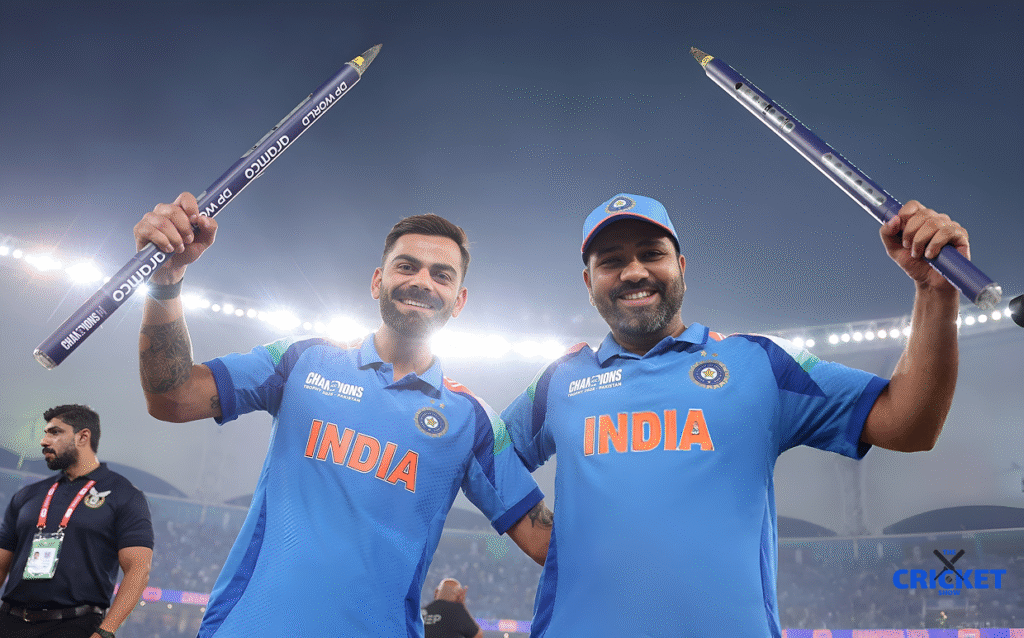
In a clear message from the Board of Control for Cricket in India (BCCI), Rohit Sharma and Virat Kohli have been given an unmistakable directive: if they want to continue representing India in One-Day Internationals (ODIs), they must take part in domestic cricket competitions. That directive has come for veteran batters Virat Kohli and Rohit Sharma, both of whom have retired from Test cricket and T20 Internationals and currently focus on the 50-over format.
While Rohit has reportedly accepted the mandate and indicated his availability for the upcoming domestic one-day tournament (the Vijay Hazare Trophy), Kohli has yet to confirm his participation.
This blog delves into the background, reasons, implications of the board’s decision, the individual responses from Rohit and Kohli, what this means for their ODI futures, and how this fits into the broader context of Indian cricket’s evolving selection and domestic emphasis.
1. Background: Why the Mandate?
The mandate comes against a backdrop of shifting priorities in Indian cricket — where the selectors and BCCI want to ensure players remain match-fit, in rhythm, and connected with the domestic game. Since Kohli and Rohit have stepped away from Tests and T20Is, their white-ball involvement focuses on ODIs, which brings with it questions about preparedness, form, and domestic engagement.
Recent series have seen the duo feature in ODIs but still spend large parts of the calendar out of domestic circuits. The board’s view: participation in domestic one-day tournaments demonstrates commitment, aids match readiness, and ensures senior players remain integrated into the country’s broader cricketing ecosystem. Selection committee head Ajit Agarkar has reinforced that message.
In short: the directive is less about retirement, and more about alignment with domestic cricket and readiness for international competition.
2. What Exactly Has the BCCI Said?
The directive, as reported by multiple media outlets, can be summarised as follows:
The board and team management have conveyed to both Kohli and Rohit: you will have to play domestic cricket if you want to play for India.
Since both players have retired from two formats (T20Is and Tests), the board views domestic one-dayers (such as Vijay Hazare) as the pathway to maintain match sharpness.
The first opportunity offered is the Vijay Hazare Trophy, possibly starting December 24 in the current cycle, before the next ODI series.
While this is not framed as punishment or a threat, it is positioned as a condition for continuing in the national ODI setup.
Thus, the message is clear: participation in domestic competitions is now a key criterion for senior players who wish to remain in national contention.
3. Rohit Sharma: His Response and Next Steps
For Rohit, the response has been swift and affirmative. According to reports:
Rohit Sharma has informed the Mumbai Cricket Association (MCA) that he will be available for the Vijay Hazare Trophy starting December 24.
He has also reportedly indicated willingness to take part in the domestic T20 tournament (the Syed Mushtaq Ali Trophy) which begins in late November, though his availability may be limited due to national commitments.
Training efforts: Rohit has been seen practising at Mumbai’s Sharad Pawar Indoor Academy, preparing for domestic cricket.
Rohit’s decision signals his readiness to comply with the board’s expectations and maintain his place in India’s white-ball plans. This move also sets a precedent for other senior players: domestic participation is no longer optional for staying in the frame.
4. Virat Kohli: The Status and Questions
By contrast, Virat Kohli’s response is more ambiguous:
Kohli has not publicly confirmed his availability for the upcoming domestic tournaments like the Vijay Hazare Trophy
While he remains a core part of India’s ODI plans, his domestic visibility has been limited since stepping away from Tests and T20Is.
The board’s directive applies equally to him: “If you want to play for India, you must play domestic cricket.”
Observers note that Kohli, currently based partly in London and focusing on franchise cricket alongside international assignments, may have scheduling and workload considerations.
In essence, Kohli finds himself at a crossroads: domestic engagement may now be a non-negotiable element of his continued ODI involvement. His next move will be closely watched by fans, selectors and analysts alike.
5. Why Domestic Cricket Matters for Senior Players
Several reasons underline the board’s insistence on domestic participation:
a) Match-Fitness & Game-Rhythm
Senior players often spend long stretches away from competitive domestic cricket, relying on international fixtures alone. Domestic tournaments help maintain rhythm, especially ahead of major series. As the BCCI source said:
b) Connecting with the Domestic Ecosystem
Domestic cricket remains the backbone of Indian cricket. Senior players participating adds value to state teams, inspires younger players, and keeps the bridge between domestic and international cricket strong.
c) Fairness & Selection Meritocracy
With the likes of Kohli and Rohit having legendary status, the board’s message also signals that no one is above the system. Participation in the domestic circuit demonstrates commitment and ensures evaluation on current form.
d) Preparation for Major Tournaments
Domestic one-dayers mimic the 50-over format and give players competitive simulation outside full international duty. This is particularly relevant with upcoming global tournaments such as the 2027 ODI World Cup.
6. Implications for the ODI Future of Kohli & Rohit
This directive definitely has consequences for both players’ ODI futures:
For Rohit Sharma
By committing to domestic cricket, Rohit reinforces his place in India’s ODI plans and might extend his career beyond what many anticipated.
His recent form (e.g., scoring a hundred in the Australia ODI series) gives him momentum and justification for continuing.
The message to younger players is also clear: seniority helps, but form and involvement matter.
For Virat Kohli
Kohli remains one of India’s greatest batters and a mainstay in the ODI lineup — yet his domestic non-appearance could become a talking point.
If he chooses to ignore or limit his domestic participation, he risks being seen as less match-sharp or disconnected from domestic cricket — which could influence future selection.
Ultimately, his decision to engage fully with domestic cricket could extend his ODI lifespan and reinforce his value to the team.
For Indian Cricket
The message is not about forcing retirement but reinforcing structures. The board is saying performance, commitment, and involvement count.
It creates a model: regardless of status, players must play competitively to stay relevant.
7. Reactions from Cricketing Fraternity
Reactions have varied:
Former spinner Ravichandran Ashwin supported the board’s position, stating that Shifting senior players back to domestic circuits was a sign of seriousness for major tournaments.
Indian coach Gautam Gambhir had earlier emphasised senior players “can play as long as they are performing” but also noted that match-readiness matters.
Fans and pundits see this as a welcome shift — reinforcing merit and current form over legacy status alone.
8. Why Now? Timing & Context
Why is this mandate coming now? A few contextual points help explain:
Both Kohli and Rohit have retired from multi-format commitments (Tests and T20Is) and are now focusing on ODIs.
India have upcoming ODI series (e.g., South Africa, New Zealand) and the path to the 2027 ODI World Cup is already in mind.
The domestic calendar offers a window (e.g., Vijay Hazare Trophy starting December 24) between international commitments, making it feasible for seniors to participate.
The selection committee wants consistent performance indicators beyond international fixtures — domestic inclusion offers a tangible marker.
9. Challenges & Considerations
Of course, there are challenges:
Workload Management: Senior players have packed international calendars. Balancing domestic matches may add strain.
Availability Conflicts: Franchise commitments or international duties might limit how many domestic fixtures they can play.
Motivation & Mind-Set: After long careers, repeating domestic battles may not be high on ambition lists; convincing players of the value is necessary.
Impact on Team Strategy: State teams may rely heavily on senior stars, affecting grooming of new talent — managing that balance is key.
10. What to Watch Next
Here are key upcoming developments:
Will Rohit turn out for Mumbai in the Vijay Hazare Trophy? Reports suggest yes.
Will Kohli commit to domestic one-dayers? His decision will reveal much about his future intentions.
How many matches will they play? Full series or selective appearances?
How selectors will treat domestic performances of senior players in comparison to emerging talent.
The impact on India’s ODI squad dynamics ahead of series against South Africa and New Zealand.
Conclusion
The BCCI’s message to Virat Kohli and Rohit Sharma is unequivocal: continuing to represent India in ODIs requires active participation in domestic cricket. It’s a shift that reinforces the importance of the domestic game, merit-based selection and maintaining match fitness.
Rohit has taken the message on board and is aligning accordingly; Kohli’s next move will be closely watched and may determine the next phase of his ODI career.
In a cricketing era where senior players still matter but so does form and readiness, this directive underlines that legacy alone is not enough. The game moves fast, and even legends must keep their competitive edge sharp — starting with domestic competition.
Written By The Cricket Show
Stay tuned to The Cricket Show – Latest Cricket Updates for all updates on player availability, domestic cricket entries, squad announcements, and expert analysis around Kohli, Rohit and India’s ODI setup.
Follow us for stories, stats breakdowns and everything you want in Indian cricket today.