IPL 2026: Gujarat Titans say “No” to Washington Sundar trade with CSK
Introduction
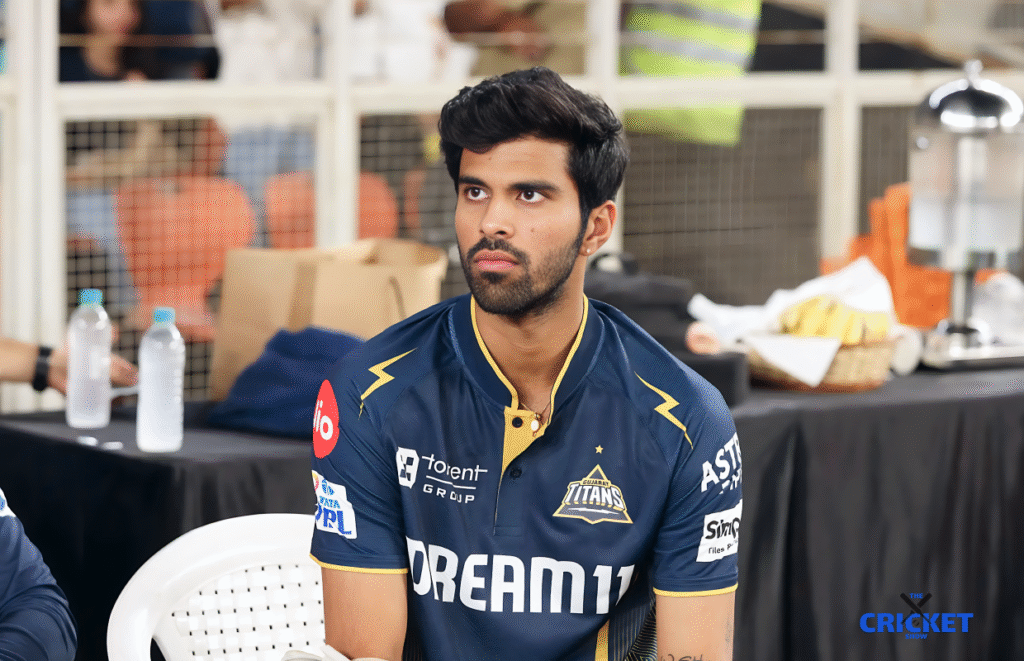
As the countdown to the 2026 Indian Premier League begins in earnest, franchise strategising is reaching peak intensity. Among the most closely watched stories this season is the attempt by Chennai Super Kings (CSK) to acquire Indian all-rounder Washington Sundar from Gujarat Titans (GT). The move promised to help CSK shore up their spin-all-round cadre—but according to recent reports, GT have firmly declined the trade approach.
1. Who Is Washington Sundar?
Washington Sundar is a young Indian off-spin bowling all-rounder, capable of contributing with the bat in crucial moments. Over the years, Washington Sundar has developed into a reliable performer across formats. Having come through India’s domestic system, Washington Sundar has proven his potential as a versatile cricketer for both franchise and national teams.
Key facts:
Sundar was acquired by Gujarat Titans in the IPL 2025 auction for INR 3.2 crore.
Although he played only six matches for GT in the 2025 season, his stock has risen owing to his performances for India, particularly an unbeaten 49 and 3/3 figures in a T20 series in Australia.
His dual capability as a bat-and-spin player makes him attractive for franchise squads looking for flexibility.
Sundar’s profile—a domestic Indian spinner who can bat—matches a key archetype in the IPL: the Indian all-rounder. When such players are available, they’re in high demand, particularly because teams face constraints around overseas players and must optimise their Indian core.
2. CSK’s Motivation for Pursuing Sundar
The Chennai Super Kings have long been a franchise that builds its strategy around spin bowling and Indian-dominated core squads. With recent developments—Ravichandran Ashwin’s retirement and the potential exit/trade of Ravindra Jadeja—the franchise finds itself in a transitional phase with regard to its spin-all-round department.
Key motivations for CSK:
Spin continuity: CSK has historically thrived on attacking spin options at the Chennai HPC pitch. Losing Jadeja (if traded) and Ashwin being retired means a gap.
Indian all-rounder balance: Sundar fits the Indian all-rounder slot: ensuring an Indian option for both bat and bowl, reducing reliance on overseas slots.
Local connection: Sundar is Chennai-born, which adds marketing and home-grown appeal for CSK fans.
Coach familiarity: Sundar made his rise under coach Stephen Fleming when he played in the Rising Pune Supergiants under Fleming’s tenure—so there’s a pre-existing rapport.
In short, for CSK Sundar represented a strategic replacement for an ageing or exiting spin core, and an opportunity to future-proof their squad at a crucial juncture.
3. Why GT Have Decided to Hold Him
On the flip side, the Gujarat Titans have clearly signalled that they view Washington Sundar as a vital part of their future plans, not a tradeable asset this season. By holding firm, GT have shown strong faith in Washington Sundar and his growing value as an Indian all-rounder. Multiple reports confirm that CSK’s approach for Washington Sundar was firmly declined by the franchise.
Reasons behind GT’s decision:
Investment paid off: GT bought Sundar at a sizeable price in 2025, and his value has since increased. They would want to see him deliver and fulfil potential rather than trade him away.
Squad balance and depth: GT likely believe that Sundar offers them flexibility—bat, bowl, multi-format value—which aligns with the modern IPL requirement for depth and contingency.
Scarcity of quality Indian spin/all-round combinations: Indian capped spinners who bat are limited. Letting one go is risky. The trade environment means retention of Indian core is increasingly important.
Strategic asset for longer term: GT may see Sundar not just for one season but as a multi-year asset, which may outweigh short-term trade considerations.
Thus, from GT’s perspective, refusing the offer aligns with longer-term team building and asset management.
4. Trade Negotiations: What Was on the Table & Why It Broke Down
Reports suggest that CSK approached GT with a proposal to acquire Sundar as part of their rebuilding. However, the negotiation collapsed.
What we know of the negotiation:
CSK’s motivation was to secure an Indian spin-all-round option given their likely exit of Jadeja/Ashwin.
GT were reportedly firm in their stance: they consider Sundar part of their future plans and not negotiable.
The trade breakdown is likely due to GT’s unwillingness to sacrifice a valuable Indian asset in exchange—or perhaps because CSK’s offer wasn’t sufficient.
Timing issues: With retention deadlines approaching (mid-November), the window was tight and CSK may have needed a rapid deal; GT held firm.
Why it didn’t proceed:
GT’s refusal to negotiate further.
CSK’s pressure to fill a gap quickly may have limited their bargaining power.
Sundar’s rising value meant GT would demand high compensation which CSK may not have been able to meet.
Strategic mismatch: CSK may have seen Sundar as a replacement; GT saw him as a long-term investment and not for trade.
Thus, the breakdown reveals not just a failed deal but a clash of strategic priorities.
5. Implications for CSK, GT and the Wider IPL Landscape
For CSK:
Gap remains in spin-all-rounder slot: With Sundar off the table, and Jadeja/Ashwin scenario still fluid, CSK must find alternatives ahead of the auction.
Auction urgency increases: CSK will likely enter IPL 2026 auction with greater urgency to address the Indian spin-all-rounder requirement—and possibly at higher cost.
Squad identity risk: CSK’s identity has been tied to spin and Indian core. Not filling that gap soon may affect balance and performance.
Fan expectations management: CSK fans expecting marquee trade moves may feel less satisfied; management must communicate effectively.
For GT:
Asset retention victory: Holding onto Sundar means GT retain flexibility and depth.
Market signal: GT’s stance sends a message that they will not easily part with rising Indian talent, strengthening their negotiating position for future deals.
Squad stability: Retaining key Indian all-rounder gives GT options for team structure and continuity.
For the IPL landscape:
Indian all-rounder value up: The episode highlights how Indian spin-all-rounders (with batting ability) are increasingly prized. Teams may act earlier next year.
Trades remain strategic and high-stakes: As IPL matures, assets like Sundar become part of longer-term planning, not short-term swaps.
Power shifts: Franchises willing to hold onto assets may gain upper hand in trade negotiations, marking a shift from earlier eras of more fluid trading.
6. What Alternatives Do CSK Have Now?
With Sundar off the table, CSK must reframe their strategy. Several alternatives include:
Internal options:
They could promote younger domestic spinners or all-rounders already in their squad.
They might shift strategy to rely more on overseas spin options, though that has trade-offs given overseas slots and Indian all-rounder value.
Auction targets:
CSK will likely bid aggressively for an Indian spin-bat all-rounder in the upcoming IPL 2026 auction.
They may explore trading for other Indian spinners from franchises willing to deal.
Strategic shift:
CSK might adjust their team identity slightly—less reliant on Indian spin-all-rounders, more flexible in structure by using all-rounders and overseas resources.
They may also rethink leadership or batting structure if the change in personnel continues (for example, older stars leaving or being traded).
In short, CSK’s repositioning will be a key storyline heading into IPL 2026.
7. What This Episode Tells Us About the Value of Indian All-Rounders & Spinners in the IPL
The Sundar trade saga highlights some broader insights.
Indian All-Rounder Premium
Indian players who bat and bowl remain extremely valuable because overseas slots are limited and Indian core players form the backbone.
Sundar’s dual capability made him more than “just another spinner”—he is seen as an asset looming large for two departments.
Spinner Importance
Especially in franchises like CSK, the spin bowling department is core to their identity. Losing Jadeja/Ashwin and failing to secure Sundar shows that teams must proactively secure Indian spin options ahead of time.
Teams without strong Indian spin-all-rounder backup face structural risk.
Trade vs Retention Strategy
The episode illustrates that retention and asset value matter. GT’s refusal suggests that teams will factor in long-term contribution rather than short-term trade profit.
For the trading franchise (CSK), it underscores that some deals cannot be forced; if a player is central to another team’s plans they may resist negotiations.
Auction Implications
With trades narrowing, the upcoming auction will see more intense competition for remaining Indian all-rounders/spinners. Teams who failed in trade negotiations face higher premiums.
The valuations may rise further, benefiting players like Sundar and their current franchises.
8. Timing & Strategic Backdrop (Retention, Auction, Squad Building)
The timing of the Sundar trade rejection is also critical.
The retention deadline for IPL 2026 is imminent; teams must finalise deals, retain players, and prepare for the auction.
CSK’s pursuit of Sundar was happening at the same time as their high-profile proposed trade involving Ravindra Jadeja and Sanju Samson with Rajasthan Royals. Inside Sport India+1
GT’s decision to decline is rooted in their long-term planning rather than reaction to CSK’s urgency.
The market for quality Indian spin/all-rounders is tightening which means deals need to be done early; delay may lead to missed opportunities or higher cost.
This episode exhibits the inter-linked nature of trade, retention and auction strategy in modern IPL-era franchise building.
9. Possible Future Scenarios
Scenario A: GT benefits
GT retain Sundar, he develops into a key performer, GT builds around their Indian core and remain competitive. CSK miss out and spend heavily in auction for a replacement.
Scenario B: CSK finds alternative
CSK lose Sundar but successfully source another Indian spin-all-rounder either via trade or auction, bridging the gap and continuing their strong performance.
Scenario C: Missed opportunity cost
CSK fail to bring Sundar or equivalent; spin/Indian all-rounder gap persists; their performance suffers in IPL 2026. Meanwhile GT enjoy depth but maybe have other issues.
Scenario D: Sundar is traded later
Although GT said no now, a deal may still happen later under different terms (e.g., after auction or next season). Negotiation may reopen, giving CSK yet another chance.
10. Final Thoughts
The failure of the Chennai Super Kings to acquire Washington Sundar from the Gujarat Titans is more than just a trade headline—it is a clear marker of how IPL franchise strategy is evolving. The fact that GT held firm while CSK’s hand was forced shows that asset management, long-term planning and Indian-player valuation are taking centre-stage.
As IPL 2026 approaches, all eyes will be on how CSK respond — whether they find another Indian spin-all-rounder like Washington Sundar, how much they spend, and whether the squad identity shifts. Meanwhile, GT’s decision may pay dividends if Washington Sundar performs consistently. Retaining Washington Sundar shows Gujarat Titans’ confidence in building around young Indian talent. If Washington Sundar continues his strong form, this could prove one of the smartest retention moves before IPL 2026.
Ultimately, this episode reinforces the importance of Indian core players like Washington Sundar, the strategic depth behind trades, and the high stakes of IPL-era franchise building. Not every trade will happen, and some deals simply won’t materialise — but how teams react to moments like the Washington Sundar trade saga will define their adaptability, balance, and long-term success in the IPL.
Written by The Cricket Show
For more trending cricket news, stats, and expert opinions, visit our homepage: The Cricket Show – Latest Cricket Updates.