Wankhede Stadium: The Heart of Indian Cricket – History, Records, and Stats
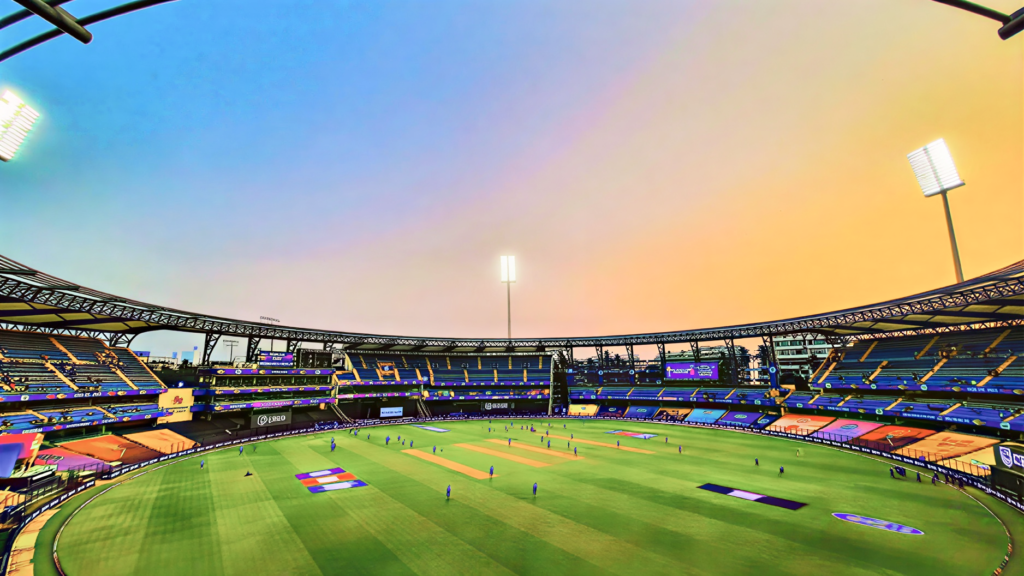
Mumbai’s Wankhede Stadium is undoubtedly the ‘Heartbeat’ of Indian cricket. Situated right next to the Arabian Sea, this stadium is more than just a patch of grass; it is a theatre of dreams where billions of Indian emotions have turned into historic celebrations.
Whether it is the iconic roar of “Mumbai… Mumbai…” or the cool sea breeze swinging the ball in the evening, Wankhede offers a cricketing experience like no other. In this deep dive, we explore the history, the legends, and the massive records that define this stadium.
1. The Birth of an Icon: A History of Defiance
The origin of Wankhede Stadium is a fascinating story of regional pride. Before 1975, all major matches in Mumbai were played at the Brabourne Stadium. However, a dispute over ticket distribution arose between the Mumbai Cricket Association (MCA) and the Cricket Club of India (CCI).
S.K. Wankhede, then secretary of the MCA, took a bold stand: Mumbai needed its own stadium. Architect Shashi Prabhu was given the monumental task, and incredibly, the stadium was constructed in just 11 months. This spirit of leadership is still seen in Mumbai’s cricket today, much like the aggressive approach discussed in our post on How Hardik Pandya is Leading MI into a New Era.
2. Test Match Mastery: The Red Soil Secret
The pitch at Wankhede is famous for its Red Soil, which offers a unique blend of bounce for fast bowlers and turn for spinners as the match progresses.
Highest Team Total: India piled up a massive 631 runs against England in the 2016/17 season.
Lowest Team Total: A shocking 62 all-out by New Zealand against India in 2021/22.
Individual Legends: The “Little Master” Sunil Gavaskar leads the charts with 1,122 runs, followed by Sachin Tendulkar with 921 runs.
Bowling Kings: Ravichandran Ashwin (41 wickets) and Anil Kumble (38 wickets) have been the most lethal on this red soil.
3. ODI Legends: The 2011 World Cup Glory
Mentioning Wankhede is impossible without recalling April 2, 2011. It was on this ground that MS Dhoni hit that iconic six, making India the first country to win a World Cup on home soil.
Historic Feats: From Gautam Gambhir’s gritty 97 to Virat Kohli’s consistency, Wankhede has seen it all. In the 2023 World Cup, India dismantled Sri Lanka here for just 55 runs.
Record Scores: South Africa holds the record for the highest ODI total at this venue, scoring 438/4 against India in 2015.
Top Performer: Virat Kohli remains the leading run-scorer in ODIs here with 474 runs, while Mohammad Shami leads the bowling charts.
In more recent times, India dismantled Sri Lanka for just 55 runs during the 2023 World Cup. Such dominance by Indian bowlers is a tradition here, which we also analyzed in our feature on Jasprit Bumrah’s Match-Winning Spell.
4. T20I and IPL: A Batsman’s Paradise
With its short boundaries (ranging from 55 to 75 meters) and a lightning-fast outfield, Wankhede is a nightmare for bowlers in the T20 format.
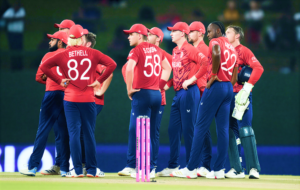
Recent Milestones: On March 5, 2026, India set a new benchmark by scoring 253/7 against England, the highest T20I total at this venue.
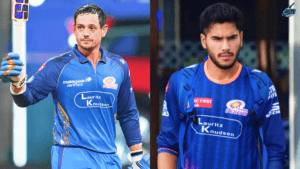
The Power Hitters: Virat Kohli (197 runs) and Rohit Sharma (165 runs) have dominated this format. Recently, youngsters like Abhishek Sharma have also made their mark with explosive strikes.
Tactical Ends: The stadium features two distinct bowling ends—the Garware Pavilion End and the Tata End.
5. Stadium Dynamics: The Sea Breeze and the Dew Factor
What makes Wankhede truly unique is its geography. Being a coastal stadium, it experiences a significant Sea Breeze in the evening, which helps swing bowlers during the first few overs of a night match.
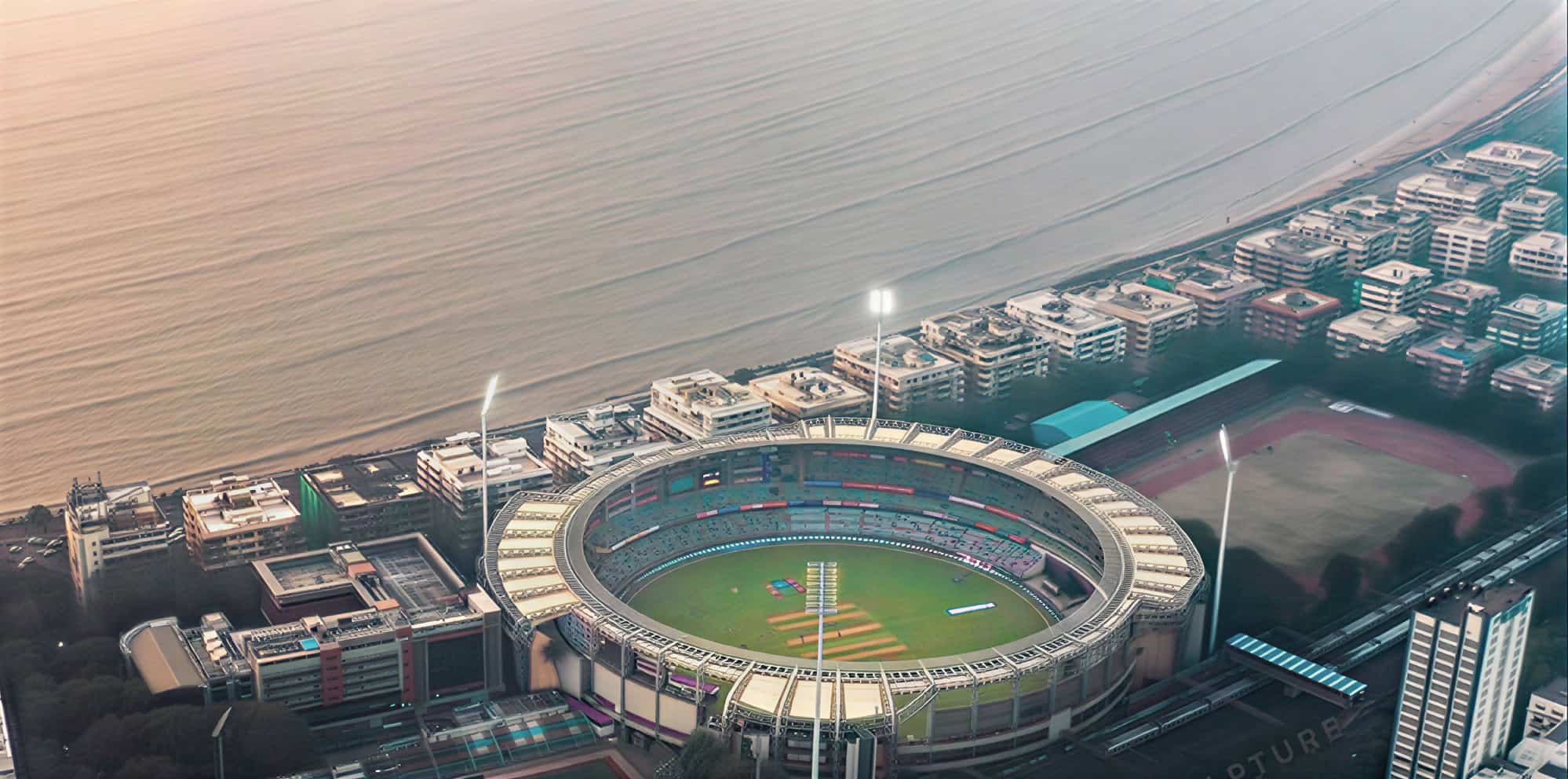
However, as the night progresses, the Dew Factor kicks in. The grass becomes wet, making it difficult for spinners to grip the ball. This is why captains often prefer to win the toss and bowl first, as chasing under the lights is significantly easier at Wankhede.
6. Standing Tall: The Iconic Stands
The stadium honors the legends of Indian cricket through its naming conventions:
Sachin Tendulkar Stand: A place where every fan wants to sit at least once.
Rohit Sharma Stand: A tribute to the ‘Hitman’ who has led MI to 5 titles.
Sunil Gavaskar Stand & Garware Stand: These stands offer some of the best viewing angles in world cricket.
Frequently Asked Questions (FAQs)
Q1: Where is Wankhede Stadium located?
It is located on D-Road, Churchgate, in South Mumbai, near the Marine Drive seafront.
Q2: Which team has the highest T20 score at Wankhede?
India holds the current record with 253/7 against England, achieved in March 2026.
Q3: Is Wankhede a batting or bowling pitch?
It is generally a batting-friendly pitch due to short boundaries, but the red soil provides extra bounce for pacers and turn for spinners.
Q4: Can I visit the stadium on non-match days?
Visits are generally restricted, but the Mumbai Cricket Association (MCA) occasionally allows tours or access through club memberships.
Conclusion
Wankhede Stadium is not just built of bricks and mortar; it is built of memories. From Sunil Gavaskar’s technical brilliance to Sachin’s emotional farewell and Dhoni’s trophy-winning strike, every blade of grass here tells a story. If you are a cricket enthusiast, witnessing a match here—amidst the rhythmic chants of “Mumbai… Mumbai…”—is a bucket-list experience.